
 By
By I run two companies that, on the surface look like they have nothing in common. One builds homes and the other works in biotechnology, specifically in biopolymers and bio-based solutions for agriculture, aquaculture, and sustainability. Concrete and microbes. Steel and fermentation. You would not necessarily seat them at the same table.
But I have come to believe they are asking the same question from different directions:
What does it mean to build for the long term?
In real estate, the long term means soil surveys, load-bearing specs, 30-year structural warranties. In biotech, it means the health of the bodies that will one day inhabit those buildings. And that is what keeps me thinking about this industry with a depth I did not expect when we started TerraPHA.
The Shift
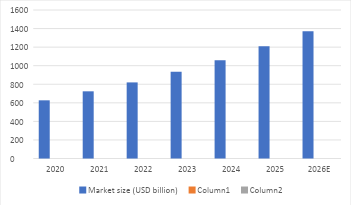
Biotech is not a future story. It is a present one. It is a market on track to cross $1.3 trillion this year, growing at a compounding pace that has not wavered even through global economic turbulence.
But markets are just the surface. The deeper story is about what the science is actually doing to how healthcare is conceived, delivered, and experienced.
We are moving faster than most people realise. From a model of treating disease to one of preventing it at the biological root. Gene therapies are no longer theoretical. mRNA platforms, which became household knowledge during the pandemic, are now being directed at cancers, rare diseases, and chronic conditions that were considered unmanageable a decade ago. Personalised medicine, the idea that your treatment is designed for your body’s specific biology, not for the statistical average of a clinical trial population is graduating from research papers into actual clinical settings.
Where TerraPHA Fits
When people think of biotech and healthcare, they think of pharmaceuticals, molecules, injections, operating theatres. They do not think of a shrimp pond in coastal Andhra Pradesh or a cattle farm in Madhya Pradesh.
They should.
At TerraPHA, we work at the upstream end of health which is the part that happens before anyone gets sick. Our PHA biopolymers, produced through naturally occurring, non-GMO microbial systems, go into feed supplements and water remediation solutions for aquaculture, animal husbandry, and agriculture. That sounds a long way from a hospital. But follow the chain.
Resistance to antibiotics maybe considered one of the gravest threats to public health today. The WHO has labeled it an urgent global concern. The fact remains that one of the main causes of the emergence of antibiotic resistance has been the prophylactic use of antibiotics in farm animals and aquaculture, which are precisely those food production systems that feed our tables. In stressful conditions that depend on chemicals, antibiotics help the survival of the animals we rear, and they come back to us.
Our bio-based solutions are designed to change that dynamic, to create healthier aquatic and livestock environments that do not require antibiotics as a crutch. Cleaner feed inputs, better gut microbiome function in animals, reduced pathogen load in water systems. The output is food that is genuinely safer, not just certified on paper.
Biology Meeting Materials Science
Here is what I find genuinely exciting and worth sitting with; the most interesting advances in biotech right now are happening at the intersections. Biology meeting materials science. Microbiology meeting environmental engineering. Nutrition science meeting precision agriculture.
The concept of the human microbiome, the trillions of microorganisms living in and on us, shaping everything from our immune response to our mental health is reshaping how we think about disease and wellness. And it turns out that the microbial intelligence we are working with at TerraPHA in soil and water systems operates on very similar principles. The same logic that governs a healthy pond ecosystem governs a healthy gut. Microbial balance. Diversity. Resilience. Absence of chemical disruption.
We did not set out to be a healthcare company. But science has a way of showing you that the boundaries you drew were always a little arbitrary.
Prevention Is Cheaper Than Cure, Always
What I believe about the next decade that biotech will not replace the doctor. It will not remove the need for hospitals or surgery or the human judgment that medicine demands. But it will push the frontier of what we consider preventable dramatically further than it sits today. Diseases that currently announce themselves only at late stages will be detectable and interceptable at the molecular level, years earlier.
The economics of healthcare will shift as a result. Prevention is cheaper than cure, always, and when prevention becomes genuinely feasible at scale, health systems will restructure around it. That creates space for companies that are building upstream especially in food safety, in environment, in materials to be recognised as part of the healthcare ecosystem, not adjacent to it.
From where I sit, running TerraPHA, that recognition cannot come soon enough. We are working on the foundations of human health and I believe that work is as consequential as anything happening in a pharmaceutical lab.
The buildings we construct at Techton are meant to outlast us. The biology we are working with at TerraPHA is meant to outlast us too in the soil, in the water, in bodies that are healthier because of choices made at the very start of the food chain.